Quezon City, March 25, 2026 — In an unprecedented move, the Philippines has officially declared a state of national energy emergency—becoming the first country in the world to do so in response to the ongoing conflict in Iran.
President Ferdinand Marcos Jr. signed an executive order to safeguard the country’s energy security, citing the “imminent danger posed upon the availability and stability” of the nation’s energy supply.
This is not just a policy decision. It is a signal that something fundamental has shifted.
Energy, something we have long treated as constant and reliable, is no longer guaranteed.

A Crisis That Hits Close to Home
The Philippines relies heavily on imported fuel. When global supply chains are disrupted, especially in regions that power much of the world’s energy, the effects ripple quickly across the country. Prices rise, supply tightens, and the grid becomes more vulnerable.
What feels like a distant geopolitical issue suddenly becomes personal.
Electricity becomes more expensive. The risk of interruptions increases. Daily routines, from work to basic household needs, begin to depend on forces far beyond our control.
For many Filipinos, this moment is a reminder that stability is more fragile than it seems.
The Reality We Can No Longer Ignore
This energy emergency highlights a deeper issue that has always existed but is now impossible to overlook.
Our homes are deeply dependent on systems we do not control.
When those systems are strained, everything else is affected. Productivity slows down. Comfort is compromised. Even a sense of safety can feel uncertain. Energy is not just a utility. It underpins how we live, work, and function every day.
And when access to it becomes unstable, so does everything else.
Why This Moment Matters
This is not an isolated event. It reflects a broader reality shaped by global conflict, climate pressures, and increasing demand for energy.
As an island nation, the Philippines is particularly exposed to these shifts. The distance between global events and local impact is shorter than we often think.
While national policies can help manage supply in the short term, they cannot eliminate the underlying vulnerability. That vulnerability exists at a much more personal level, in how we power our homes and structure our daily lives.
Rethinking What a Home Should Provide
For a long time, homes have been designed with the assumption that power will always be available. But that assumption is becoming harder to rely on.
If energy is uncertain, then the role of a home needs to evolve. It is no longer just about providing shelter or space. It is about providing continuity. The ability to function normally even when external systems are under strain.
This shift is subtle, but important. It changes how we think about resilience, not as something abstract, but as something built into everyday living.
Sustainability is often discussed in terms of environmental impact. Carbon footprints, emissions, long-term global outcomes. But in moments like this, sustainability takes on a more immediate meaning.
It becomes about stability.
About reducing exposure to rising costs. About softening the impact of disruptions. About creating systems that are less dependent on a single source of failure. In that sense, sustainability is not just about the future of the planet. It is about the reliability of daily life.
A Quiet Shift in How We Build
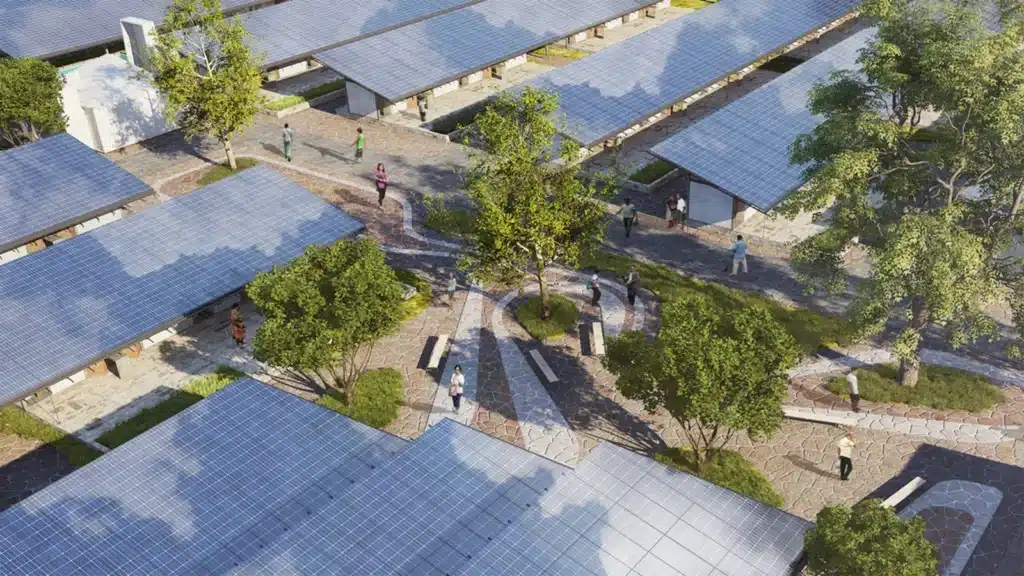
There is a growing recognition that homes can do more than consume energy. They can also produce it, manage it more efficiently, and reduce the burden on external systems.
In the Philippines, where sunlight is abundant and climate conditions demand thoughtful design, this shift feels less like an innovation and more like a logical step forward.
It does not mean complete independence from the grid. But it does mean greater control. Greater resilience. A reduced sense of vulnerability when external conditions become uncertain.
The declaration of a national energy emergency is a reminder that stability is not something we can take for granted.
It prompts a simple but important question:
What would it mean to feel secure in your home, regardless of what is happening outside of it?
For some, the answer may begin with small changes. For others, it may involve rethinking how homes are designed from the ground up.
At BillionBricks, this question has been at the core of how we approach housing. Projects like the Sienna Net-Zero Home explore what it means to integrate energy generation directly into the home, not as an add-on, but as part of its foundation.
Not as a statement, but as a practical response to a changing world.